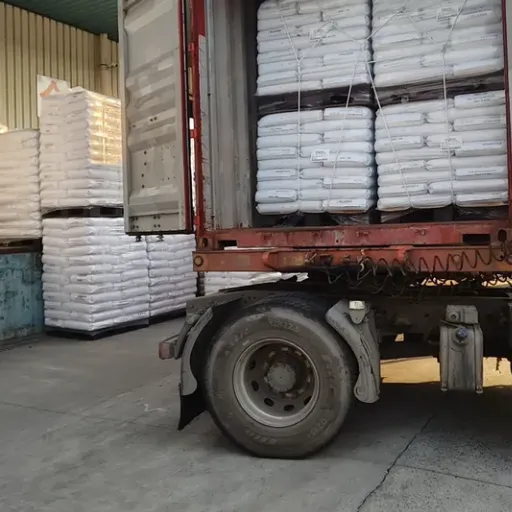
Business License

POM Material Selection Guide: Properties, Applications, and Grades
POM material, polyoxymethylene, also known as acetal, is a high-crystallinity engineering plastic valued for its stiffness, low friction, and excellent dimensional stability. It is the material of choice for precision gears, bearings, automotive fuel-system components, and other parts that must hold tight tolerances under mechanical stress.
Last year, an injection molder in Suzhou switched from a generic nylon to a specified POM grade for a small gear train. The change cut dimensional variation by 40% and reduced assembly scrap across six production runs. The difference was not the machine settings. It was the material selection.
If you design or source mechanical plastic components, you already know that not every engineering plastic performs the same under load. Selecting the right POM material means balancing mechanical strength, chemical resistance, processability, and supplier reliability. This guide explains what POM material is, where it outperforms alternatives, how to select the right grade, and what to look for when sourcing it from a distributor. You will learn the key properties of polyoxymethylene, its most common applications, the difference between homopolymer and copolymer grades, processing best practices, and a practical comparison with nylon.
Key Takeaways
POM material (polyoxymethylene/acetal) delivers high stiffness, low friction, and excellent dimensional stability for precision mechanical parts.
Homopolymer POM offers higher mechanical strength and hardness; copolymer POM provides better chemical resistance and hydrolytic stability.
POM is widely used in gears, bearings, automotive fuel components, electrical housings, and consumer appliance parts.
Proper drying, mold temperature control, and gate design are critical for successful POM injection molding.
Sourcing POM through an authorized distributor ensures authentic grades, batch traceability, and consistent technical documentation.
What Is POM Material?
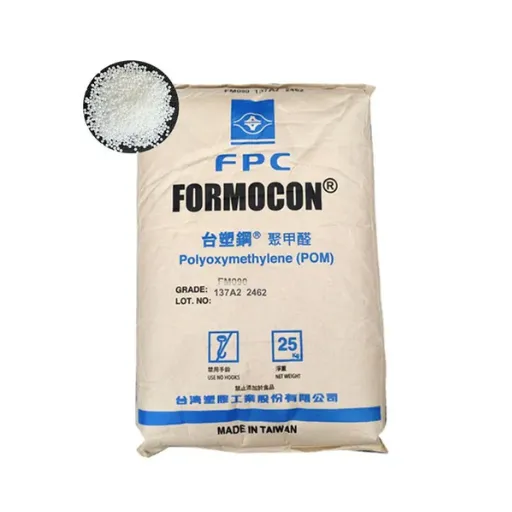
Polyoxymethylene (POM) is a semi-crystalline thermoplastic known in industry as acetal, polyacetal, or acetal resin. It belongs to the engineering plastics family and sits between commodity plastics and high-performance polymers in terms of cost and performance. POM material is produced through the polymerization of formaldehyde, and it is available in two main forms: homopolymer (POM-H) and copolymer (POM-C).
Homopolymer POM, commercialized by DuPont under the Delrin brand, has a more ordered molecular structure. This gives it slightly higher crystallinity, greater tensile strength, and better fatigue resistance than copolymer grades. Copolymer POM, offered by suppliers such as Polyplastics under the Duracon brand and Korea Engineering Plastics under KOCETAL, has a more randomized chain structure. This structure improves chemical resistance, particularly against hydrolysis and alkaline environments, and often delivers better long-term stability in hot or wet conditions.
Both forms of POM material share a common set of characteristics that make them attractive for precision parts:
High stiffness and mechanical strength
Low coefficient of friction
Excellent wear resistance
Good dimensional stability under load
Low moisture absorption compared to nylon
Good electrical insulating properties
Resistance to many solvents and fuels
When a procurement manager at a power-tool manufacturer in Ningbo needed to replace a metal gear with a plastic one, the engineering team first considered nylon. The concern was moisture absorption: nylon can swell in humid conditions, changing gear mesh and creating noise. They chose a copolymer POM grade instead. The gears maintained their dimensions through summer humidity, passed 200 hours of torque testing, and reduced unit weight by 60%.
At Ailide Polymer, we distribute POM materials from authorized global suppliers including Polyplastics and Korea Engineering Plastics. Every grade ships with a technical data sheet and certificate of analysis to support traceability and quality assurance.
Key POM Material Properties
Understanding the property profile of POM material helps engineers match it to the right application. The following table summarizes typical values for unfilled homopolymer and copolymer POM grades. Exact values vary by supplier and grade, so always consult the technical data sheet for the specific material under consideration.
| Property | POM Homopolymer | POM Copolymer | Test Method |
|---|---|---|---|
| Density | 1.41–1.43 g/cm³ | 1.39–1.41 g/cm³ | ISO 1183 |
| Tensile Strength | 65–70 MPa | 58–65 MPa | ISO 527 |
| Flexural Modulus | 2,800–3,100 MPa | 2,500–2,800 MPa | ISO 178 |
| Heat Deflection Temperature | 130–140 °C | 100–110 °C | ISO 75 |
| Melting Point | 175–178 °C | 163–167 °C | ISO 3146 |
| Water Absorption (24 h) | 0.2–0.3% | 0.2–0.3% | ISO 62 |
| Coefficient of Friction | 0.15–0.35 | 0.15–0.35 | ASTM D3702 |
The table shows why POM material is often chosen over softer plastics. Its tensile strength and flexural modulus are high enough to replace metal in many low-to-moderate load applications. Its low coefficient of friction makes it ideal for moving parts. Its low water absorption gives it an advantage over nylon in applications where dimensional stability across humidity changes is important.
Beyond the numbers, POM material offers good creep resistance. Creep is the slow deformation of a material under constant load. For parts like snap fits, spring clips, or preloaded bearings, creep resistance is critical. POM holds its shape under sustained stress better than many general-purpose plastics.
POM also resists a wide range of chemicals including gasoline, diesel fuel, lubricating oils, and many solvents. This makes it a natural fit for automotive fuel-system components and industrial machinery parts exposed to oils. However, strong acids and oxidizing agents can attack POM, so chemical compatibility should always be verified for aggressive environments.
The electrical properties of POM material are also well suited for housings, connectors, and switches. It offers good dielectric strength and insulation resistance, although it is not typically the first choice for high-temperature electrical applications where PBT or PA66 might be preferred.
Common POM Applications
POM material appears in products across automotive, electronics, industrial, and consumer goods sectors. Its combination of strength, low friction, and dimensional stability makes it especially useful wherever plastic parts must move, mesh, or maintain precision.
Automotive Components
The automotive industry is one of the largest consumers of POM material. Fuel-system components such as fuel pump housings, sender units, and valve bodies rely on POM's resistance to hydrocarbons and its ability to hold tight tolerances. Interior applications include seat-belt components, door-lock mechanisms, and window-lifter gears. Under-hood uses are more limited by temperature but include clips, fasteners, and cable guides where the operating temperature stays within the POM range.
Electrical and Electronics
POM is used in electrical housings, switches, connectors, and keyboard keys. Its good insulation properties and surface finish support both functional and aesthetic requirements. For high-temperature connector bodies, engineers often compare POM with PBT or PA66 before making a final selection.
Industrial Machinery
This is where POM material truly shines. Gears, bearings, bushings, rollers, cam followers, and sliding blocks all benefit from low friction and wear resistance. In conveyor systems, POM rollers reduce noise and maintenance compared to metal alternatives. In packaging machinery, POM guides and cams withstand repetitive motion without lubrication.
Consumer Appliances and Goods
Appliance manufacturers use POM for gears in power tools, washing-machine components, and small appliance mechanisms. Plumbing fixtures such as faucet cartridges and valve components use POM because it resists hot water and maintains sealing performance over many cycles. Zippers, lighters, and toy parts also take advantage of its rigidity and snap-fit behavior.
When an appliance OEM in Guangdong redesigned a blender gear train, the original ABS gears were cracking under repeated startup torque. The team tested two POM copolymer grades and selected one with improved impact resistance. The new gears survived 50,000 cycles in accelerated life testing and eliminated the field-failure mode that had driven warranty costs up for three months.
POM Grades and Material Selection
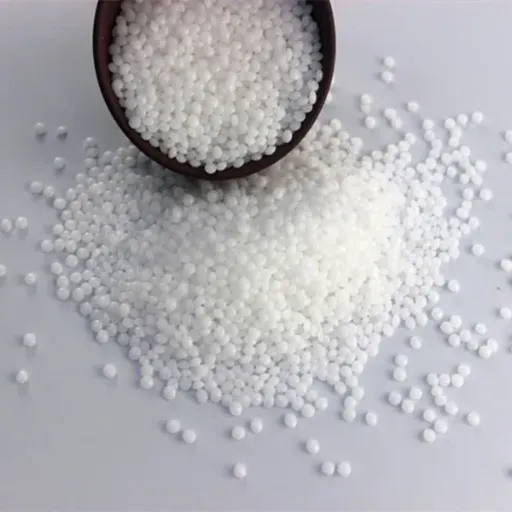
Not all POM material is the same. Suppliers offer a wide range of grades tailored to specific processing methods, mechanical requirements, and end-use environments. Choosing the right grade requires more than reading a general data sheet.
Homopolymer vs Copolymer POM
The first decision is usually between homopolymer and copolymer POM. Homopolymer grades such as DuPont Delrin offer the highest mechanical strength, stiffness, and fatigue resistance. They are often chosen for gears, springs, and structural components where maximum performance is required. Copolymer grades such as Polyplastics Duracon or KOCETAL provide better chemical resistance, especially against hot water and alkalis, and a slightly wider processing window. They are often preferred for plumbing, automotive fuel, and outdoor applications.
Reinforced and Filled Grades
Glass-fiber-reinforced POM increases stiffness, strength, and heat resistance. These grades are used in structural parts where metal replacement is the goal. However, glass fiber increases wear on mating surfaces and can reduce impact resistance, so it is not ideal for all gear or bearing applications.
Mineral-filled grades offer improved dimensional stability and reduced warpage. They are often used in large, flat parts or components with tight flatness requirements. Low-friction and lubricated grades contain internal lubricants such as PTFE or silicone to reduce friction and wear in moving parts.
Specialized Grades
UV-stabilized POM is formulated for outdoor or sunlight-exposed applications where standard grades would degrade and discolor. Anti-static grades reduce static buildup in electronic and explosive environments. Food-contact grades comply with regulations such as FDA or EU 10/2011 for applications like beverage dispensers and kitchen appliances.
Selecting the right POM material grade starts with a clear definition of the application's mechanical load, temperature range, chemical exposure, mating materials, and regulatory requirements. If your team needs help comparing grades, our technical support team can review your requirements and recommend suitable options from our POM materials portfolio.
POM vs Nylon: How to Choose
POM and nylon (polyamide) are the two most common engineering plastics for wear-resistant mechanical parts. Both can replace metal in gears, bearings, and bushings. The right choice depends on the specific application conditions.
Moisture Absorption
Nylon absorbs significantly more moisture than POM. In a humid environment, nylon parts can swell, soften, and lose dimensional precision. POM absorbs roughly 0.2% water in 24 hours compared to 1–2% or more for many nylon grades. For precision gears or tight-tolerance parts in variable humidity, POM often has the advantage.
Mechanical Properties
Nylon generally offers higher toughness and better impact resistance, especially at low temperatures. Glass-filled nylon can achieve very high strength and stiffness. POM offers higher stiffness, lower friction, and better fatigue resistance in unfilled form. For parts that see repetitive motion and need low wear, POM is usually preferred.
Chemical Resistance
POM resists fuels, oils, and many solvents better than nylon. Nylon resists some alkalis and has better behavior with certain organic chemicals. For fuel-system or lubricated machinery components, POM is typically the safer choice.
Cost and Availability
Both materials are widely available and competitively priced. Specific grade prices fluctuate with raw-material markets and supplier allocations. Working with an authorized distributor helps secure authentic grades at stable lead times.
A pump manufacturer in Shandong faced exactly this decision. Their original nylon impeller bushing was absorbing water from the pumped fluid, causing interference fits to loosen after several months of service. They switched to a hydrolysis-resistant copolymer POM grade. The new bushing maintained its fit and reduced replacement frequency from every six months to every two years.
For a deeper comparison, see our POM vs Nylon guide.
POM Processing Best Practices
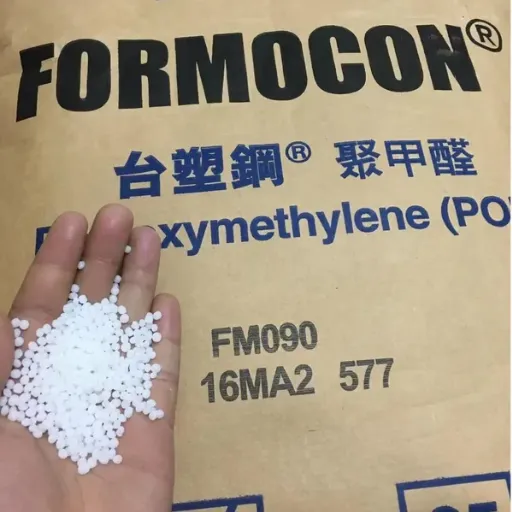
POM material processes well by injection molding, extrusion, and blow molding. Injection molding is by far the most common method for precision parts. To get the best results, processors must pay attention to material handling, temperature, and mold design.
Drying
Although POM absorbs less moisture than nylon, it still benefits from drying before processing. Typical drying conditions are 80–100 °C for 2–4 hours. Proper drying prevents surface defects such as splay and ensures consistent melt viscosity.
Melt and Mold Temperature
POM homopolymer melts at approximately 175–178 °C, while copolymer melts at 163–167 °C. Typical melt temperatures range from 190–230 °C depending on the grade and part geometry. Mold temperatures of 60–120 °C are common. Higher mold temperatures improve surface finish and crystallinity but extend cycle time.
Injection Pressure and Speed
POM flows well, so moderate to high injection speeds are usually acceptable. Injection pressure should be high enough to fill the cavity completely and pack out shrinkage. Holding pressure and time influence dimensional stability and warpage.
Gate and Vent Design
POM material releases formaldehyde-like decomposition products if overheated, so good venting is essential. Gate design should avoid overly restrictive features that create excessive shear heat. Parts with thick sections require careful processing to prevent voids and sink marks.
Regrind Use
Regrind can be used with POM, but it should be clean, dry, and limited in proportion. Excessive regrind can degrade mechanical properties and increase variation. Many processors limit regrind to 10–25% depending on part requirements.
A molder in Jiangsu once struggled with brown streaks in a natural POM gear. The root cause was degraded material left in the barrel from a previous run. After implementing purging procedures and reducing barrel residence time, the defect disappeared and color consistency improved across all batches.
Sourcing POM Material in China
Sourcing engineering plastics in China offers cost and logistics advantages, but it also carries risks if the supply chain is not properly managed. Counterfeit resin, off-spec batches, and missing documentation can disrupt production and damage product quality.
The most effective way to reduce these risks is to work with an authorized distributor. Authorized distributors source directly from global resin producers and provide the documentation needed for traceability. This includes technical data sheets, certificates of analysis, and origin documentation.
Ailide Polymer maintains long-term cooperative relationships with leading global resin producers including DuPont, Polyplastics, Chi Mei, Formosa Plastics, LCY Chemical, Asahi Kasei, Bayer, and BASF. Our authorized supplier network ensures that the POM material you receive is authentic, traceable, and supported by proper documentation.
We distribute POM nationwide across China and support export customers with documentation and logistics coordination. Whether you need a trial batch for validation or a long-term production supply program, we can recommend the right grade and deliver on schedule. Every batch is backed by our quality assurance process and technical support team.
Ready to evaluate POM material for your application? Request a quote and our team will provide pricing, technical data sheets, and material recommendations based on your requirements.
Frequently Asked Questions
What is POM material used for?
POM material is used for precision mechanical parts that require high stiffness, low friction, and good dimensional stability. Common applications include gears, bearings, bushings, automotive fuel-system components, electrical housings, appliance mechanisms, and plumbing fixtures.
Is POM the same as acetal?
Yes. POM, polyoxymethylene, and acetal all refer to the same family of engineering plastics. The terms are used interchangeably in industry, although acetal sometimes specifically refers to homopolymer grades in North American markets.
What is the difference between POM homopolymer and copolymer?
Homopolymer POM has higher mechanical strength, stiffness, and fatigue resistance. Copolymer POM offers better chemical resistance, particularly to hot water and alkalis, and a wider processing window. The best choice depends on the application's load, chemical exposure, and environmental conditions.
Can POM be used for food contact?
Yes, specific food-contact grades of POM are available and comply with regulations such as FDA requirements or EU 10/2011. Always verify that the specific grade has the required regulatory approvals for your application.
How does POM compare to nylon?
POM absorbs less moisture, offers lower friction, and provides better dimensional stability than nylon. Nylon generally has higher toughness and impact resistance. POM is preferred for precision moving parts in humid or chemically exposed environments, while nylon may be better for high-impact or low-temperature applications.
What documents should a POM supplier provide?
A qualified POM supplier should provide a technical data sheet (TDS), certificate of analysis (COA) for the specific batch, and documentation supporting material origin and traceability. Authorized distributors can also provide supplier certification and regulatory compliance documents upon request.
Conclusion
POM material remains one of the most reliable engineering plastics for precision mechanical components. Its combination of stiffness, low friction, wear resistance, and dimensional stability makes it a strong alternative to metal in gears, bearings, automotive parts, and industrial machinery. Understanding the difference between homopolymer and copolymer grades, selecting the right reinforcement or additive package, and following proper processing guidelines will help you get the most from this versatile polymer.
When sourcing POM material, supplier qualification matters as much as grade selection. Authorized distribution, batch traceability, and complete documentation protect your production line from the risks of counterfeit or off-spec resin.
If you are evaluating POM for an upcoming project, contact our technical team for grade recommendations and a tailored quotation. We supply certified POM materials from globally recognized producers, with nationwide delivery across China and export support for international customers.
Recently Posted
-
ABS in Automotive Interiors: From Dashboards to Door Panels
September 2, 2026A tier-two supplier once substituted a general-purpose ABS for an automotive-grade ABS on a door trim component to save 4% on resi Read More
 -
ABS Flame Retardant Grades and UL 94 Ratings Explained: A Practical Guide for Buyers and Designers
September 2, 2026An electronics manufacturer once submitted a power-supply housing molded from standard ABS to a safety certification test. The mat Read More
 -
KOCETAL K300 vs Formosa FM090 vs DURACON M90: Picking the Right Medium-Viscosity POM
September 2, 2026A gear shop in India once ordered a container of acetal copolymer based on a 5% price discount, without checking whether the grade Read More
 -
PP vs PE: Which Polyolefin Resin Fits Your Application?
September 2, 2026A bottle manufacturer once chose HDPE for a hot-fill juice container and watched the bottles distort on the filling line. The mate Read More

Contact Us
Recommended Products
-
 Automotive Interior Clip and Door Lock POM K300 Injection Molding Material With Low FrictionNegotiableMOQ: 1 Kilogram
 -
KOCETAL POM K300 Virgin Pellets For Precision Gear Bearing Automotive Latch Water Valve PartsNegotiableMOQ: 1 Kilogram
-
Original Kolon POM K300 Engineering Plastic Wear Resistant Self Lubricating Acetal GranulesNegotiableMOQ: 1 Kilogram
-
Self-Lubricating POM K300 HDT 120°C Wear Resistant Resin With 0.2% Moisture AbsorptionNegotiableMOQ: 1 Kilogram
-
POM FM090AW PTFE Filled Wear Resistant Low Friction Acetal for Silent GearsNegotiableMOQ: 1 Kilogram
-
POM FM090 General Purpose Acetal Copolymer With Excellent MachinabilityNegotiableMOQ: 1 Kilogram
-
POM FM090 Standard Flow Acetal Copolymer Granules for Precision Injection MoldingNegotiableMOQ: 1 Kilogram
-
POM FM090 UV Stabilized Acetal Resin for Outdoor Automotive ComponentsNegotiableMOQ: 1 Kilogram
-
Technical Support Available POM K300 Acetal Copolymer for Precision Injection Molding ServiceNegotiableMOQ: 1 Kilogram
-
KOCETAL POM K300 Acetal Copolymer MFR 9 G/10min 1.41g/cm³ Tensile Strength 60MPaNegotiableMOQ: 1 Kilogram
-
Factory Price Polyacetal POM Resin FM090 for Engineering ApplicationsNegotiableMOQ: 1 Kilogram
-
High Strength Cheap POM FM090 UV Engineering Plastic for Automotive PartsNegotiableMOQ: 1 Kilogram
-
Virgin POM FM090 Granules Pellets Engineering Plastic Raw MaterialNegotiableMOQ: 1 Kilogram
-
POM K300 Plastic Granules 1.5% Shrinkage Rate 80 Shore D Hardness Stable Injection Molding PerformanceNegotiableMOQ: 1 Kilogram
-
Low Friction Coefficient High Dimensional Stability POM K300 Acetal Copolymer Injection Molding GradeNegotiableMOQ: 1 Kilogram

-
POM K300 Acetal Sheet Used for Automotive Gear Components and Conveyor Chains in Industrial MachineryNegotiableMOQ: 1 Kilogram
-
POM K300 Engineering Plastic Sheet With Melting Point 165°C and Excellent Wear Resistance for MachiningNegotiableMOQ: 1 Kilogram
-
POM K300 Acetal Copolymer Injection Molding Grade With Low Friction Coefficient and High Dimensional StabilityNegotiableMOQ: 1 Kilogram
-
POM K300 Polyoxymethylene Resin MFI 9 Engineering Plastic Granule for Injection MoldingNegotiableMOQ: 1 Kilogram
-
Virgin POM Granules Polyoxymethylene Pellets Manufacturer Direct Price for Injection MoldingNegotiableMOQ: 1 Kilogram