Business License

Delrin vs POM: What's the Real Difference?
Delrin is a brand name for polyoxymethylene (POM) homopolymer made by DuPont, while POM is the generic material family that also includes copolymer grades from suppliers such as Polyplastics and Mitsubishi. When engineers compare Delrin vs POM, they are usually deciding between homopolymer and copolymer acetal.
In March 2025, a procurement manager named Zhang Wei at a Suzhou automotive supplier received a drawing that specified "POM" for a fuel-system clip. His engineering team asked whether Delrin 100 would perform better.
Zhang requested quotes for both a Delrin homopolymer grade and a Polyplastics copolymer grade. After reviewing the data sheets, he selected the copolymer. It offered better hydrolysis resistance at a lower unit cost. The clip passed 1,000-hour fuel-immersion testing without dimensional change.
If you're choosing between Delrin and another POM grade, this guide will help you understand the technical, processing, and cost differences. You'll learn how acetal vs Delrin decisions usually come down to homopolymer and copolymer grade selection.
Key Takeaways
Delrin is DuPont's brand of POM homopolymer; POM also includes copolymer grades from Polyplastics, Mitsubishi, and other suppliers.
Delrin homopolymer offers higher stiffness, tensile strength, and fatigue resistance than most copolymer grades.
POM copolymer generally has better thermal stability, chemical resistance, and impact toughness.
Delrin typically costs more per kilogram and has a slightly narrower processing window than copolymer POM.
Ailide Polymer supplies both Delrin and POM copolymer grades with technical data sheets and application support.
What Delrin and POM Actually Are
Delrin isn't a separate material from POM. It's DuPont's trade name for POM homopolymer, one of the two main types of polyoxymethylene resin. The other main type is POM copolymer, sold under names such as Polyplastics Duracon, Mitsubishi Iupital, and Celanese Hostaform.
Both types share the same core characteristics that make acetal useful: high stiffness, low friction, excellent dimensional stability, and good wear resistance. The difference lies in the molecular structure.
Homopolymer chains are made of repeating formaldehyde units. This gives a more regular and crystalline structure. Copolymer chains include small amounts of comonomer, which interrupts regularity and changes how the material behaves under heat and chemicals.
Common Delrin and POM Copolymer Grades
Delrin material is available in several standard grades. Delrin 100 is an unfilled general-purpose grade with high stiffness and strength. Delrin 500 offers slightly higher viscosity and is often used for extrusion and thick-wall injection molding. Delrin 900P is a low-viscosity grade designed for fast-cycle injection molding of thin-wall parts.
POM copolymer grades include Polyplastics Duracon M90, a general-purpose injection molding grade, and Mitsubishi Iupital F20-02, widely used for automotive and industrial components. These POM plastic grades often process more easily than homopolymer equivalents and are available in a wide range of colors and modifications.
For a broader overview of the material family, see our article on POM polyoxymethylene mechanical properties or browse the POM grades we supply.
Delrin vs POM: Homopolymer and Copolymer Compared
The Delrin vs POM comparison is best understood as a POM homopolymer vs copolymer comparison. Each has clear strengths and trade-offs.
| Property | Delrin (POM Homopolymer) | POM Copolymer |
|---|---|---|
| Tensile strength | 66-70 MPa | 58-62 MPa |
| Flexural modulus | ~2,800 MPa | ~2,400 MPa |
| Melting point | ~175 °C | ~165 °C |
| Impact resistance (Izod notched) | 6-8 kJ/m² | 7-10 kJ/m² |
| Thermal stability | Good | Better |
| Hydrolysis resistance | Good | Better |
| Chemical resistance | Good | Better against some bases and hot water |
| Fatigue resistance | Better | Good |
| Typical suppliers | DuPont | Polyplastics, Mitsubishi, Celanese |
Delrin homopolymer's more regular structure gives it higher crystallinity. That translates into higher stiffness, strength, and fatigue life. Copolymer's interrupted structure gives it better toughness and resistance to thermal degradation. That's why it performs better in long-term hot-water and fuel-contact applications.
Mechanical Performance Differences
When designers evaluate these two acetal options for a mechanical part, the first comparison is usually mechanical properties.
Stiffness and Strength
Delrin homopolymer has a flexural modulus around 2,800 MPa and tensile strength of 66-70 MPa. POM copolymer is closer to 2,400 MPa flexural modulus and 58-62 MPa tensile strength. For parts that must resist bending under load, such as gears, levers, and spring clips, Delrin's higher stiffness is an advantage.
Toughness and Impact
POM copolymer generally absorbs more impact energy. Izod notched impact values for copolymer are typically 7-10 kJ/m² compared with 6-8 kJ/m² for homopolymer. Copolymer is often the better choice for parts that may experience occasional impact, snap assembly, or vibration.
Fatigue Resistance
Delrin homopolymer performs well under cyclic loading. It is widely used for gears, springs, and lever arms that move repeatedly. Copolymer also has good fatigue resistance, but homopolymer usually wins in high-cycle applications where maximum life matters.
Thermal and Chemical Behavior
Temperature and chemical exposure often decide the Delrin-versus-POM question more than mechanical properties do.
Heat Resistance
Delrin has a higher melting point, around 175 °C, compared with 165 °C for typical copolymer grades. However, copolymer tolerates long-term exposure to elevated temperatures better. It's less prone to thermal degradation and formaldehyde release when overheated.
For continuous service above 80 °C, especially in moist or chemically active environments, copolymer is usually the safer choice.
Hydrolysis and Chemical Resistance
POM copolymer resists hydrolysis better than homopolymer. It is the preferred material for hot-water fittings, dishwasher components, and parts exposed to alkaline cleaning solutions. Delrin performs well in fuels, oils, and many solvents, but it can be more sensitive to strong bases and hot water over time.
Processing Differences
Both Delrin and POM copolymer are processed by injection molding, but their parameter windows differ.
Melt and Mold Temperatures
Delrin homopolymer typically processes at 190-215 °C melt temperature. Copolymer POM processes at 180-210 °C. The homopolymer window is slightly higher and narrower. Mold temperatures are similar, generally 60-95 °C depending on grade and application.
Thermal Stability During Molding
Copolymer POM is more forgiving during molding. It's less likely to degrade if residence time is slightly long or temperature control drifts. Delrin requires tighter temperature control and shorter residence time to avoid formaldehyde release and material degradation.
For detailed processing guidance, see our POM injection molding guide.
Cost and Availability
Delrin is a premium brand-name material. It typically commands a higher price per kilogram than generic POM copolymer grades. The price difference varies by grade, volume, and market conditions, but Delrin can cost 10-30% more than equivalent copolymer grades.
Generic POM copolymer from Polyplastics, Mitsubishi, and other suppliers is widely available. It's often more cost-effective for high-volume applications where the performance difference isn't critical.
When to Choose Delrin
Delrin homopolymer is the better choice when:
Maximum stiffness and strength are required.
The part experiences repeated cyclic loading.
Dimensional stability under load is critical.
The application involves fuels, oils, or solvents but not strong bases or hot water.
Brand consistency and supplier documentation are required by the customer.
Common Delrin applications include precision gears, bearings, bushings, springs, clips, and high-load mechanical components.
When to Choose POM Copolymer
POM copolymer is the better choice when:
The part contacts hot water, steam, or alkaline chemicals.
Thermal stability during processing or long-term service is a concern.
Higher impact toughness is needed.
Cost is a significant factor and the performance difference is acceptable.
Wide processing window helps reduce scrap in complex molds.
Common copolymer applications include plumbing fittings, automotive fuel-system components, pump housings, and parts exposed to cleaning chemicals.
Selecting the Right Grade for Your Application
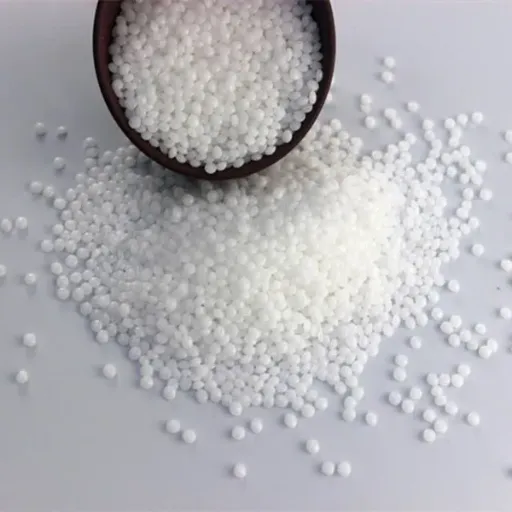
The best way to decide between Delrin and POM copolymer is to match material properties to application requirements.
Define the load: Is the part static, cyclic, or impact-loaded?
Check temperature: What is the maximum continuous operating temperature?
Identify chemical exposure: Will the part contact water, fuel, oil, bases, or solvents?
Consider processing: Does your molding operation have tight temperature control?
Evaluate cost targets: Does the performance gain justify the price premium?
Review supplier requirements: Does your customer specify a brand or grade?
For help matching a grade to your project, see our POM material selection guide or contact our technical support team.
Quick Selection Reference
Use this table as a fast reference when you're deciding between Delrin and POM copolymer.
| Application Need | Recommended Choice | Why |
|---|---|---|
| High stiffness and strength | Delrin | Higher flexural modulus and tensile strength |
| Hot water or steam exposure | POM copolymer | Better hydrolysis resistance |
| Fuel or oil contact | Either | Both perform well; copolymer has edge in long-term heat |
| High-volume cost-sensitive parts | POM copolymer | Lower material cost per kilogram |
| Repeated cyclic loading | Delrin | Better fatigue resistance |
| Complex mold with tight tolerances | POM copolymer | Wider processing window |
| Outdoor UV exposure | UV-stabilized grade | Neither standard grade is UV stable |
Delrin vs POM: Mini-Case Comparisons
Automotive Fuel Clip
A Ningbo supplier needed a clip for a fuel-injection line. The drawing specified POM. The team tested Delrin 100 and a Polyplastics copolymer grade. Both passed mechanical testing. The copolymer grade showed better dimensional stability after 500 hours at 85 °C in fuel blend. The team selected copolymer and reduced material cost by 15%.
High-Cycle Gear
A Dongguan manufacturer produced a small gear for a power tool. Initial prototypes used a copolymer POM. After 50,000 cycles, the gear showed tooth wear. Switching to Delrin 500 increased stiffness and fatigue life. The gear survived 200,000 cycles with minimal wear. The higher material cost was justified by the longer service life.
FAQ: Delrin vs POM
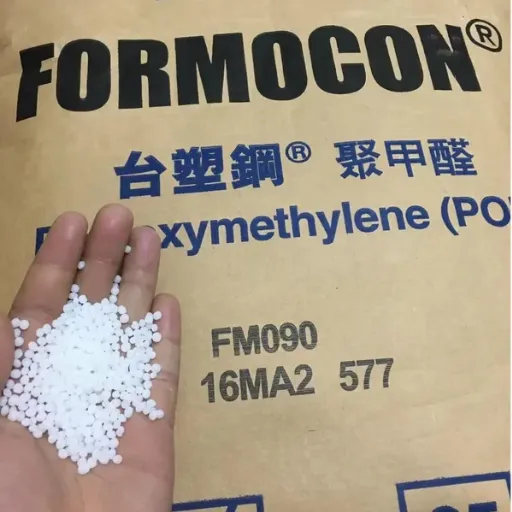
Is Delrin the same as POM?
Delrin is DuPont's brand name for POM homopolymer. It's a type of POM, not a separate material. POM also includes copolymer grades made by other suppliers.
Which is stronger, Delrin or POM?
Delrin homopolymer is generally stronger and stiffer than POM copolymer. It has higher tensile strength and flexural modulus. However, POM copolymer often has better toughness and impact resistance.
Can Delrin and POM copolymer be used interchangeably?
Sometimes, but not always. For lightly loaded parts in moderate environments, either may work. For high-cycle, high-stiffness, or chemically demanding applications, the choice matters. Always compare data sheets and validate with testing.
Why is Delrin more expensive than POM copolymer?
Delrin is a branded product from DuPont with a long-established reputation for quality and consistency. Brand positioning, global distribution, and technical support contribute to the premium price.
Is Delrin better for gears?
Delrin is often preferred for precision gears because of its higher stiffness, fatigue resistance, and dimensional stability. For gears in wet or chemically exposed environments, a copolymer or lubricated grade may be better.
Which grade is better for outdoor use?
Neither standard Delrin nor standard copolymer is ideal for long-term UV exposure without stabilization. For outdoor applications, choose a UV-stabilized or weather-resistant grade. Confirm performance with accelerated aging tests.
Conclusion
The Delrin vs POM comparison is really a choice between homopolymer and copolymer acetal. Delrin offers higher stiffness, strength, and fatigue resistance. POM copolymer offers better thermal stability, chemical resistance, and cost efficiency. The right choice depends on load, temperature, chemical exposure, processing conditions, and budget.
Ailide Polymer supplies certified Delrin and POM copolymer grades from authorized global suppliers. We provide technical data sheets, batch traceability under a strict quality assurance framework, and technical support for material selection and processing questions.
Contact our team to discuss your project, request a quote for certified POM grades, or arrange a trial batch for application testing.
Recently Posted
-
ABS in Automotive Interiors: From Dashboards to Door Panels
September 2, 2026A tier-two supplier once substituted a general-purpose ABS for an automotive-grade ABS on a door trim component to save 4% on resi Read More
 -
ABS Flame Retardant Grades and UL 94 Ratings Explained: A Practical Guide for Buyers and Designers
September 2, 2026An electronics manufacturer once submitted a power-supply housing molded from standard ABS to a safety certification test. The mat Read More
 -
KOCETAL K300 vs Formosa FM090 vs DURACON M90: Picking the Right Medium-Viscosity POM
September 2, 2026A gear shop in India once ordered a container of acetal copolymer based on a 5% price discount, without checking whether the grade Read More
 -
PP vs PE: Which Polyolefin Resin Fits Your Application?
September 2, 2026A bottle manufacturer once chose HDPE for a hot-fill juice container and watched the bottles distort on the filling line. The mate Read More

Contact Us
Recommended Products
-
 Automotive Interior Clip and Door Lock POM K300 Injection Molding Material With Low FrictionNegotiableMOQ: 1 Kilogram
 -
KOCETAL POM K300 Virgin Pellets For Precision Gear Bearing Automotive Latch Water Valve PartsNegotiableMOQ: 1 Kilogram
-
Original Kolon POM K300 Engineering Plastic Wear Resistant Self Lubricating Acetal GranulesNegotiableMOQ: 1 Kilogram
-
Self-Lubricating POM K300 HDT 120°C Wear Resistant Resin With 0.2% Moisture AbsorptionNegotiableMOQ: 1 Kilogram
-
POM FM090AW PTFE Filled Wear Resistant Low Friction Acetal for Silent GearsNegotiableMOQ: 1 Kilogram
-
POM FM090 General Purpose Acetal Copolymer With Excellent MachinabilityNegotiableMOQ: 1 Kilogram
-
POM FM090 Standard Flow Acetal Copolymer Granules for Precision Injection MoldingNegotiableMOQ: 1 Kilogram
-
POM FM090 UV Stabilized Acetal Resin for Outdoor Automotive ComponentsNegotiableMOQ: 1 Kilogram
-
Technical Support Available POM K300 Acetal Copolymer for Precision Injection Molding ServiceNegotiableMOQ: 1 Kilogram
-
KOCETAL POM K300 Acetal Copolymer MFR 9 G/10min 1.41g/cm³ Tensile Strength 60MPaNegotiableMOQ: 1 Kilogram
-
Factory Price Polyacetal POM Resin FM090 for Engineering ApplicationsNegotiableMOQ: 1 Kilogram
-
High Strength Cheap POM FM090 UV Engineering Plastic for Automotive PartsNegotiableMOQ: 1 Kilogram
-
Virgin POM FM090 Granules Pellets Engineering Plastic Raw MaterialNegotiableMOQ: 1 Kilogram
-
POM K300 Plastic Granules 1.5% Shrinkage Rate 80 Shore D Hardness Stable Injection Molding PerformanceNegotiableMOQ: 1 Kilogram
-
Low Friction Coefficient High Dimensional Stability POM K300 Acetal Copolymer Injection Molding GradeNegotiableMOQ: 1 Kilogram

-
POM K300 Acetal Sheet Used for Automotive Gear Components and Conveyor Chains in Industrial MachineryNegotiableMOQ: 1 Kilogram
-
POM K300 Engineering Plastic Sheet With Melting Point 165°C and Excellent Wear Resistance for MachiningNegotiableMOQ: 1 Kilogram
-
POM K300 Acetal Copolymer Injection Molding Grade With Low Friction Coefficient and High Dimensional StabilityNegotiableMOQ: 1 Kilogram
-
POM K300 Polyoxymethylene Resin MFI 9 Engineering Plastic Granule for Injection MoldingNegotiableMOQ: 1 Kilogram
-
Virgin POM Granules Polyoxymethylene Pellets Manufacturer Direct Price for Injection MoldingNegotiableMOQ: 1 Kilogram