Business License

Polyplastics POM Grades: DURACON Selection Guide for Engineers and Buyers
Polyplastics POM grades, sold under the DURACON trade name, are acetal copolymer resins organized by melt flow rate and functional modification. For most precision parts, M90-44 is the standard starting point, M270-44 suits thin-wall or complex moldings, NW-02 targets low-friction sliding parts, and GH-25 adds glass fiber for stiffness. The right grade depends on your part geometry, load, wear conditions, and processing setup.
Choosing a grade from a catalog of dozens of codes can feel overwhelming, especially when a wrong choice shows up months later as gear noise, warpage, or field failures. If you have ever qualified a material only to find it wears too fast or warps out of tolerance, you are not alone.
This guide explains how the DURACON product family is structured, what the most common Polyplastics POM grades actually do, and how to match a grade to your application. You will also get practical processing guidance and sourcing advice, so you can move from datasheet to production with confidence.
Ailide Polymer distributes Polyplastics POM materials through authorized channels in China, so the grade information below reflects what we quote, stock, and support for manufacturers every week.
Key Takeaways
Polyplastics DURACON is a POM copolymer (acetal) known for dimensional stability, low friction, and fatigue resistance in precision parts.
Grade codes follow a logic: the number after the letter indicates flow level, and prefixes or suffixes indicate modifications such as glass fiber, lubricants, or UV stabilization.
M90-44 covers most general-purpose needs; M270-44 is the go-to for thin-wall and complex parts; NW-02 is the standard low-wear sliding grade; GH-25 is the standard 25% glass-reinforced grade.
DURACON copolymer offers better long-term heat aging and chemical resistance than homopolymer POM, at a slightly lower peak mechanical strength.
Buying through an authorized distributor protects you against regrind contamination, mislabeled lots, and missing certificates of analysis.
What Is Polyplastics DURACON POM?
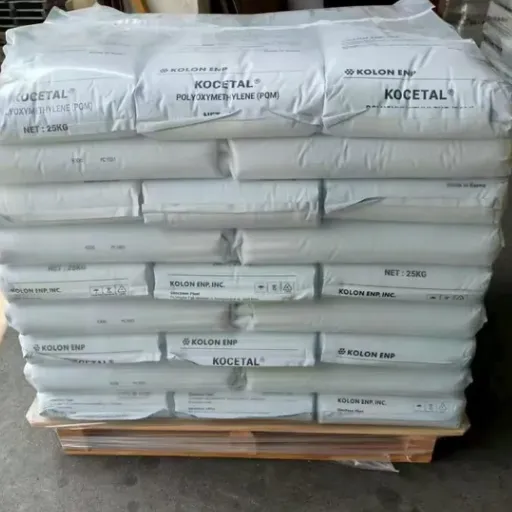
DURACON is the trade name for polyoxymethylene (POM) copolymer resin produced by Polyplastics Co., Ltd., one of the world's largest dedicated engineering plastics manufacturers. POM, also called acetal, is a highly crystalline thermoplastic valued for stiffness, low friction, and excellent dimensional stability over a wide temperature range.
Polyplastics has supplied acetal resins for decades and supports global automotive, electronics, and consumer goods programs. The DURACON line covers unfilled standard grades, high-flow grades, weather-resistant grades, wear-modified grades, glass-reinforced grades, conductive grades, and more.
For background on the company and its product families, the Polyplastics Global website publishes official datasheets and processing guides. You can also cross-check typical property values on independent databases such as MatWeb or Omnexus.
How Polyplastics POM Grades Are Organized
Understanding the naming logic behind Polyplastics POM grades saves hours of datasheet reading. Once you decode the system, you can shortlist candidates before ever opening a technical data sheet.
The Flow-Rate Numbering System
For standard unfilled grades, the letter M is followed by a number that approximates the melt flow rate. A lower number means higher viscosity and a stiffer melt, which generally brings higher mechanical toughness. A higher number means easier flow for thin walls and intricate molds.
M25-44: high viscosity, high toughness, suited to extrusion and heavy-duty parts
M90-44: medium viscosity, the general-purpose workhorse for injection molding
M270-44: high flow, for thin-wall parts, long flow paths, and multi-cavity molds
M450-44: ultra-high flow, for very fine or high-cavitation precision molding
Modification Prefixes and Suffixes
Letters or number changes around the base code signal functional modifications:
-45 suffix (for example M90-45): improved weather and UV resistance for outdoor use
NW-02: internally lubricated, low-friction, low-wear grade for sliding parts
GH-25: 25% glass fiber reinforced for high stiffness and strength
GB-25: glass bead filled for lower warpage in reinforced parts
YF series: PTFE-modified grades for demanding wear applications
EB and CH series: anti-static and carbon-fiber conductive grades for electronics handling
Pro Tip: When two grades seem equivalent, compare the flexural modulus and notched Izod impact values on the technical data sheet first. Those two numbers explain most in-field performance differences.
The Most Common Polyplastics POM Grades and Their Uses
The table below summarizes the DURACON grades we quote most often, along with their defining trait and typical applications.
| Grade | Key Trait | Typical Applications |
|---|---|---|
| M90-44 | General purpose, balanced properties | Gears, zippers, buckles, clips, pump parts |
| M270-44 | High flow | Thin-wall connectors, small precision parts |
| M25-44 | High viscosity, high toughness | Extruded rod and sheet, heavy-duty sliders |
| M90-45 | UV and weather resistant | Outdoor latches, automotive exterior clips |
| NW-02 | Low friction, low wear, low noise | Sliding gears, rollers, conveyor components |
| GH-25 | 25% glass fiber reinforced | Structural brackets, high-load housings |
| GB-25 | Glass bead filled, low warpage | Flat precision parts needing stiffness |
| YF-10 | PTFE-modified wear grade | Bearings, bushings, high-PV sliding parts |
When M90-44 Is the Right Call
M90-44 is the default grade for a reason. It balances stiffness, impact strength, and moldability, and it is the most widely stocked DURACON grade worldwide. If your part has walls above roughly 1.5 mm and no extreme wear or load requirements, start here.
A conveyor components manufacturer in Dongguan learned this the practical way. Their lead engineer, Huang Wei, had specified a wear-modified grade for every roller in a packaging line, assuming more lubricant was always better. The material cost ran 22% higher than necessary. Worse, the soft lubricated surface picked up scratches during assembly.
After reviewing the actual wear conditions, his team found that only the three highest-friction rollers truly needed NW-02. The rest switched to M90-44. Material spend on that product line dropped by about 15%, with no change in service life.
When to Step Up to a Specialty Grade
Move beyond M90-44 when one of these conditions applies:
Thin walls or long flow paths: Choose M270-44 to avoid short shots and high injection pressure.
Continuous sliding contact: Choose NW-02 or a YF-series grade to reduce wear and noise.
Outdoor exposure: Choose M90-45 to resist UV-driven surface chalking and embrittlement.
High structural load: Choose GH-25 for roughly double the flexural modulus of unfilled resin.
Flatness-critical reinforced parts: Choose GB-25, since glass beads warp less than glass fibers.
Not sure which grade fits your part? Talk to our technical team about your load, temperature, and wear conditions, and we will recommend a DURACON grade with a matching technical data sheet.
How to Choose the Right DURACON Grade for Your Application
A disciplined selection process prevents expensive requalification later. Work through these five factors in order.
1. Define the Mechanical Load
Start with stress type and magnitude. Continuous high load favors glass-reinforced GH-25. Impact or snap-fit loading favors the tougher unfilled grades like M90-44 or M25-44. Check creep data for parts under constant load, because all unreinforced acetals creep over time.
2. Map the Thermal and Chemical Environment
DURACON performs reliably from about -40 °C to 100 °C in continuous service, with short-term peaks higher. Copolymer chemistry gives good resistance to fuels, oils, and many solvents, which is why POM dominates automotive fuel-system components. Strong acids and strong oxidizing agents remain the weak point, so confirm chemical exposure against the resistance tables in the TDS.
3. Evaluate Wear and Friction Conditions
Quantify the sliding speed, contact pressure, and mating material. Steel-on-POM pairs behave differently from POM-on-POM. If your part slides continuously, lubricated grades like NW-02 reduce both wear rate and squeak noise. High pressure-velocity combinations call for the PTFE-modified YF series instead.
4. Match Flow to Your Mold
Measure your thinnest wall section and longest flow path. As a rule of thumb, thin-wall parts below 1 mm or flow-length-to-thickness ratios above 150:1 call for M270-44. Forcing a standard-viscosity grade into a thin-wall mold raises injection pressure, residual stress, and warpage risk.
5. Confirm Regulatory and Documentation Needs
Automotive and food-contact programs often require specific documentation. Confirm early whether you need a certificate of analysis per lot, UL yellow card data, or food-contact compliance statements. An authorized distributor can supply these with every shipment, which matters more than most buyers expect during audits.
Processing Guidelines for DURACON POM
Polyplastics POM grades share broadly similar processing windows, which makes grade switching on the shop floor relatively painless.
Drying
Acetal copolymer absorbs little moisture, but surface moisture still causes splay and silver streaks. Dry pellets at 80 to 100 °C for three to four hours before molding, especially in humid seasons or after open-bag storage.
Melt and Mold Temperatures
Typical melt temperature for DURACON is 190 to 210 °C. Avoid prolonged residence above 230 °C. Overheated POM degrades and releases formaldehyde. The result is gas marks, nozzle drool, and in severe cases pressure buildup in the barrel.
Mold temperatures of 60 to 80 °C suit most parts. For precision components, 80 to 100 °C improves surface finish and dimensional stability.
Shrinkage and Tolerances
Unfilled DURACON shrinks roughly 1.8 to 2.2% in the flow direction, which is high compared with amorphous resins. Design molds with this in mind, and expect glass-reinforced grades like GH-25 to shrink less but anisotropically. For a deeper dive on acetal selection, see our POM material selection guide.
DURACON Copolymer vs Homopolymer POM
Buyers often ask whether to specify a copolymer like DURACON or a homopolymer such as Delrin. In other words, comparing DURACON vs Delrin is really comparing copolymer and homopolymer acetal. The honest answer is that both are excellent materials with different strengths.
Homopolymer POM offers slightly higher tensile strength, stiffness, and fatigue endurance at room temperature. Copolymer POM offers better resistance to hot water, alkalis, and long-term heat aging, plus a wider processing window and generally better centerline porosity control in thick sections.
Sarah, a sourcing manager at a Suzhou automotive supplier, faced this decision for a fuel-pump flange last year. The part sat in warm fuel continuously. Homopolymer tested marginally stronger in short-term tensile bars.
The copolymer, however, held its properties better in the 1,000-hour fuel immersion test. Her team standardized on DURACON M90-44. The part passed OEM validation on the first submission. The lesson is simple: match the chemistry to the actual service environment, not the headline datasheet numbers.
If you are weighing POM against polyamide for the same part, our nylon vs POM comparison walks through moisture uptake, wear, and dimensional stability trade-offs.
Why Source Polyplastics POM Through an Authorized Distributor
The engineering plastics market in China includes parallel imports, repackaged lots, and occasionally mislabeled material. For a resin whose entire value proposition is consistency, that risk is real.
Sourcing DURACON through an authorized channel gives you:
Authentic material with intact original packaging and lot numbers
Full documentation, including certificates of analysis and technical data sheets for every lot
Batch traceability from the Polyplastics production line to your receiving dock
Technical backup on grade selection, processing, and failure analysis
Stable supply through long-term allocation agreements rather than spot-market availability
Ailide Polymer maintains long-term cooperative relationships with Polyplastics and other global producers through our authorized supplier network. We stock common POM grades for nationwide delivery, support trial quantities for validation, and provide the documentation your quality team needs for audits.
For a broader look at vetting suppliers, read our guide on sourcing authentic engineering plastics in China.
Frequently Asked Questions
What is the most common Polyplastics POM grade?
M90-44 is the most widely used DURACON grade. It is a medium-viscosity, general-purpose acetal copolymer suited to injection-molded gears, clips, fasteners, and consumer mechanisms. Its balance of stiffness, toughness, and flow makes it the default starting point for new projects.
Is DURACON the same as acetal?
Yes. DURACON is Polyplastics' trade name for its polyoxymethylene resin, and POM is commonly called acetal or polyacetal. DURACON is specifically a copolymer acetal, which differs slightly from homopolymer acetals in thermal and chemical resistance.
What is the difference between M90-44 and M270-44?
Both are unfilled standard grades, but they differ in melt flow rate. M90-44 has medium viscosity and suits most parts, while M270-44 flows much more easily and is designed for thin walls, long flow paths, and high-cavitation molds.
Which Polyplastics POM grade is best for gears?
For most gears, M90-44 works well. For sliding gears, plastic-on-plastic gear pairs, or noise-sensitive mechanisms, the internally lubricated NW-02 grade reduces wear and operating noise significantly.
What is the MOQ for Polyplastics POM in China?
Minimum order quantities vary by grade and stock position. Standard grades like M90-44 are often available from stock in smaller trial quantities, while specialty grades may require full-bag or consignment orders. Request a quote with your target grade and volume for exact terms.
Does DURACON POM need drying before molding?
Yes, although it absorbs less moisture than nylon. Drying at 80 to 100 °C for three to four hours removes surface moisture that otherwise causes splay and surface defects, particularly in humid climates.
Conclusion
Polyplastics POM grades follow a logical system once you decode it: flow rate numbers for moldability, and prefixes or suffixes for wear, weather, reinforcement, and conductivity modifications. Match the grade to your load, environment, wear conditions, and mold geometry, and DURACON will deliver the dimensional stability and fatigue resistance that made acetal the default engineering plastic for precision parts.
The shortest path to the right grade is a conversation with people who quote and support these materials daily. Request a quote and technical data sheet for your target DURACON grade, or contact our technical team to review your application requirements. Order a trial batch, validate it in your tooling, and scale up with documentation-backed confidence.
Recently Posted
-
ABS in Automotive Interiors: From Dashboards to Door Panels
September 2, 2026A tier-two supplier once substituted a general-purpose ABS for an automotive-grade ABS on a door trim component to save 4% on resi Read More
 -
ABS Flame Retardant Grades and UL 94 Ratings Explained: A Practical Guide for Buyers and Designers
September 2, 2026An electronics manufacturer once submitted a power-supply housing molded from standard ABS to a safety certification test. The mat Read More
 -
KOCETAL K300 vs Formosa FM090 vs DURACON M90: Picking the Right Medium-Viscosity POM
September 2, 2026A gear shop in India once ordered a container of acetal copolymer based on a 5% price discount, without checking whether the grade Read More
 -
PP vs PE: Which Polyolefin Resin Fits Your Application?
September 2, 2026A bottle manufacturer once chose HDPE for a hot-fill juice container and watched the bottles distort on the filling line. The mate Read More

Contact Us
Recommended Products
-
 Automotive Interior Clip and Door Lock POM K300 Injection Molding Material With Low FrictionNegotiableMOQ: 1 Kilogram
 -
KOCETAL POM K300 Virgin Pellets For Precision Gear Bearing Automotive Latch Water Valve PartsNegotiableMOQ: 1 Kilogram
-
Original Kolon POM K300 Engineering Plastic Wear Resistant Self Lubricating Acetal GranulesNegotiableMOQ: 1 Kilogram
-
Self-Lubricating POM K300 HDT 120°C Wear Resistant Resin With 0.2% Moisture AbsorptionNegotiableMOQ: 1 Kilogram
-
POM FM090AW PTFE Filled Wear Resistant Low Friction Acetal for Silent GearsNegotiableMOQ: 1 Kilogram
-
POM FM090 General Purpose Acetal Copolymer With Excellent MachinabilityNegotiableMOQ: 1 Kilogram
-
POM FM090 Standard Flow Acetal Copolymer Granules for Precision Injection MoldingNegotiableMOQ: 1 Kilogram
-
POM FM090 UV Stabilized Acetal Resin for Outdoor Automotive ComponentsNegotiableMOQ: 1 Kilogram
-
Technical Support Available POM K300 Acetal Copolymer for Precision Injection Molding ServiceNegotiableMOQ: 1 Kilogram
-
KOCETAL POM K300 Acetal Copolymer MFR 9 G/10min 1.41g/cm³ Tensile Strength 60MPaNegotiableMOQ: 1 Kilogram
-
Factory Price Polyacetal POM Resin FM090 for Engineering ApplicationsNegotiableMOQ: 1 Kilogram
-
High Strength Cheap POM FM090 UV Engineering Plastic for Automotive PartsNegotiableMOQ: 1 Kilogram
-
Virgin POM FM090 Granules Pellets Engineering Plastic Raw MaterialNegotiableMOQ: 1 Kilogram
-
POM K300 Plastic Granules 1.5% Shrinkage Rate 80 Shore D Hardness Stable Injection Molding PerformanceNegotiableMOQ: 1 Kilogram
-
Low Friction Coefficient High Dimensional Stability POM K300 Acetal Copolymer Injection Molding GradeNegotiableMOQ: 1 Kilogram

-
POM K300 Acetal Sheet Used for Automotive Gear Components and Conveyor Chains in Industrial MachineryNegotiableMOQ: 1 Kilogram
-
POM K300 Engineering Plastic Sheet With Melting Point 165°C and Excellent Wear Resistance for MachiningNegotiableMOQ: 1 Kilogram
-
POM K300 Acetal Copolymer Injection Molding Grade With Low Friction Coefficient and High Dimensional StabilityNegotiableMOQ: 1 Kilogram
-
POM K300 Polyoxymethylene Resin MFI 9 Engineering Plastic Granule for Injection MoldingNegotiableMOQ: 1 Kilogram
-
Virgin POM Granules Polyoxymethylene Pellets Manufacturer Direct Price for Injection MoldingNegotiableMOQ: 1 Kilogram